Top 10 Things to Do in Mui Ne Beyond the Beaches
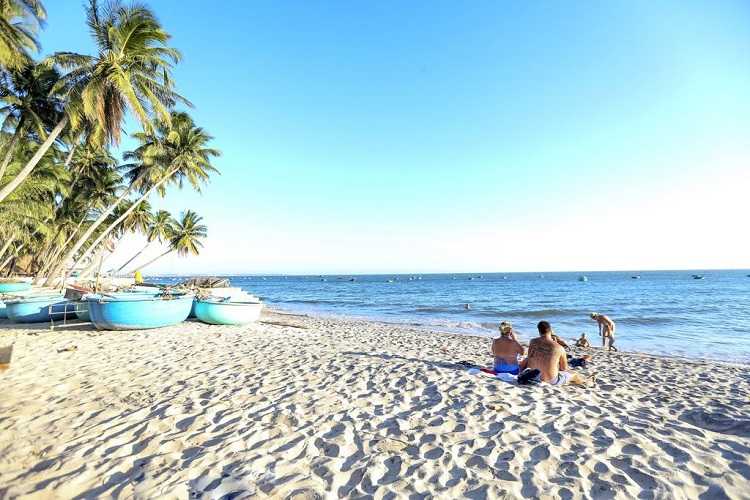
Most travelers arrive in Mui Ne with one thing on their mind — the beach. And honestly, who could blame them? The stretch of golden sand kissed by the South China Sea is nothing short of breathtaking. But here is the truth that every seasoned traveler eventually discovers: Mui Ne is so much more than its coastline. Tucked behind the resort-lined boulevard lies a landscape so dramatic, so culturally layered, and so visually arresting that the beach almost feels like the opening act.
Imagine standing on the rim of towering rust-red sand dunes as the sun bleeds orange across the horizon. Picture wading barefoot through a fairy-tale stream, its banks painted in shades of crimson and ochre. Envision a centuries-old Cham tower rising in silence above the scrubland, whispering stories of a civilization long gone. This is the Mui Ne that most visitors never get to see — and it is absolutely worth chasing.
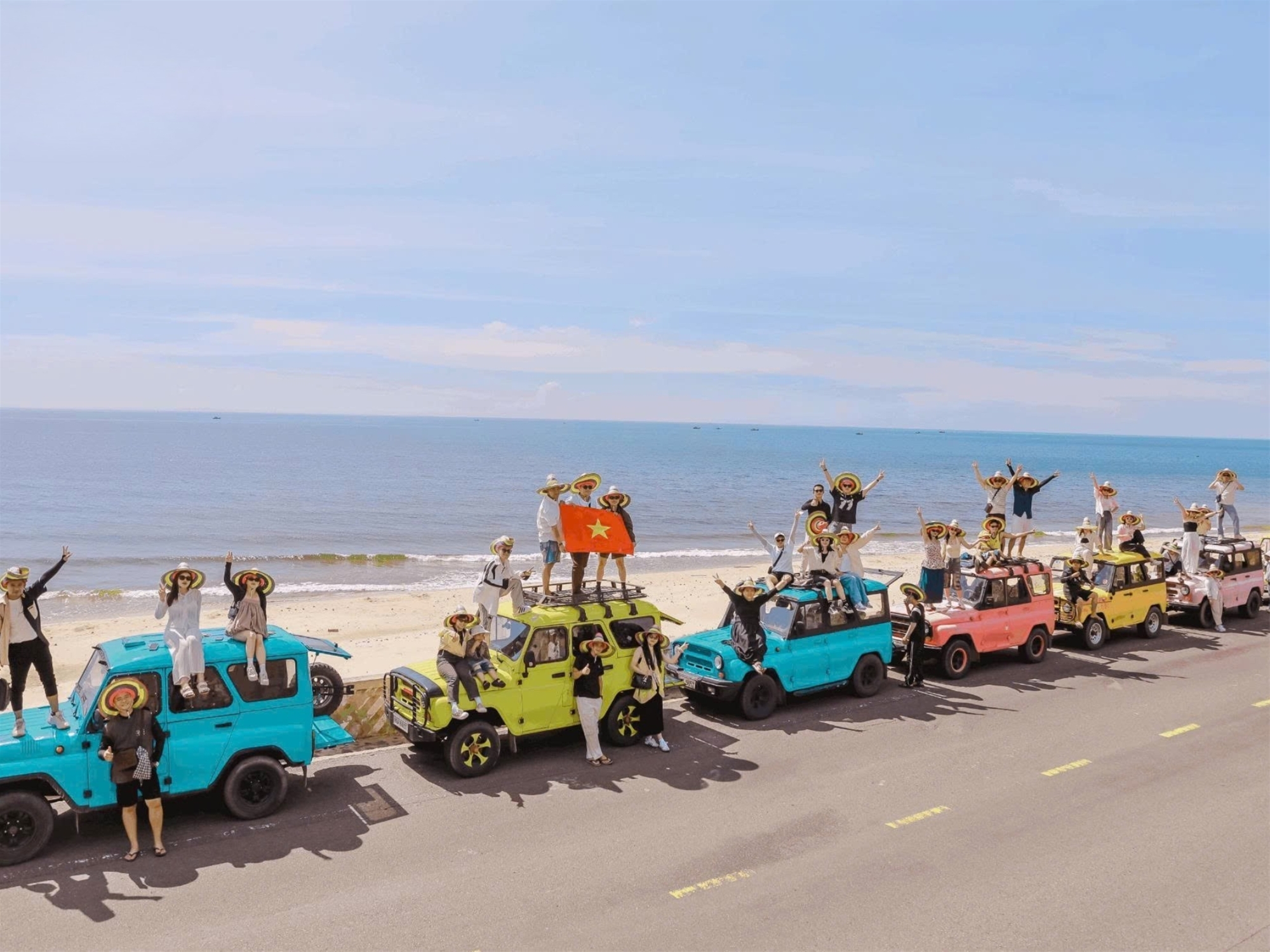
The single best way to unlock all of these hidden gems in one seamless adventure? A Mui Ne jeep tour. These iconic open-top military jeeps have become the definitive vehicle for exploring the region's scattered highlights, weaving through sand tracks, coastal roads, and rural villages with an energy that no air-conditioned bus can replicate. Whether you join a classic sunrise jeep tour or book a private full-day excursion, the jeep is your key to Mui Ne beyond the beach. Here are the top 10 things to do — and why the jeep ties them all together.
1. Chase the Sunrise at the White Sand Dunes
The White Sand Dunes of Mui Ne, locally known as Bàu Trắng or White Lake, sit about 50 kilometers north of the town center and are best experienced at the crack of dawn. As the first light spills over the pale crests of the dunes, the landscape transforms into something almost lunar — vast, silent, and impossibly beautiful. Visitors who arrive mid-morning miss the magic entirely, baking instead under a relentless tropical sun.
A pre-dawn jeep departure from your hotel typically gets you to the White Dunes just as the sky begins to blush. Climbing the ridgeline in near-darkness, then watching the sunrise paint the sand in gold and lavender, is one of those travel memories that genuinely stays with you. Many jeep tours include a local guide who knows exactly which ridge offers the best photographic vantage point — no guessing required.
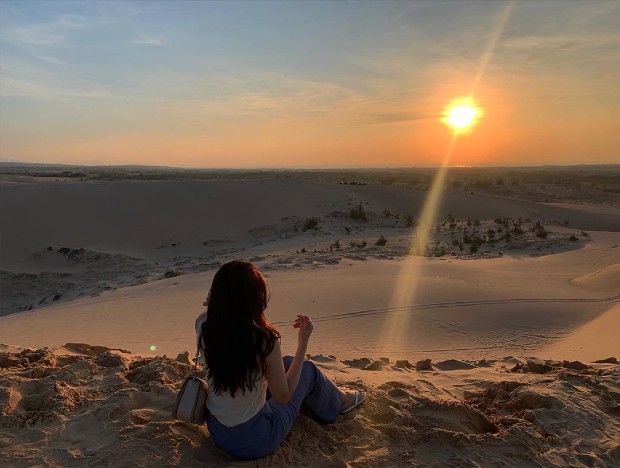
Beyond the sunrise spectacle, the White Dunes are also home to a serene lotus lake that reflects the surrounding dunes like a mirror. Sand sledding is popular here, with vendors renting plastic boards at the base of the slopes. It is a playful, exhilarating way to experience a landscape that feels borrowed from the Sahara but is entirely, uniquely Vietnamese.
2. Explore the Legendary Red Sand Dunes at Sunset
If the White Dunes are the morning show, the Red Sand Dunes are the evening encore. Located just a short drive from central Mui Ne, these iron-oxide-rich dunes glow like embers in the late afternoon light, their vivid terracotta hues intensifying as the sun descends. The contrast against the deep blue sky and distant ocean creates a palette that photographers lose their minds over — and rightfully so.
The Red Dunes are also dramatically more accessible than their white counterparts, making them a popular stop on most half-day jeep tours. You will often find local children offering to race you down the sandy slopes on their plastic sleds, laughing all the way — an interaction that is as charming as it is spontaneous. Small vendors line the upper ridge selling fresh coconut water, the perfect refreshment after the climb.

What makes the Red Dunes particularly special as a jeep tour destination is the approach itself. Arriving in an open-top military jeep, the wind in your hair and the landscape shifting from coastal scrub to crimson sand, you feel the full cinematic weight of the transition. It is arrival as theater, and the jeep plays it perfectly. Book your Mui Ne jeep tour to include both dune sites for the ultimate red-and-white contrast experience.
3. Wade Through the Enchanting Fairy Stream
Hidden in plain sight just a few kilometers from the beach strip, the Fairy Stream (Suối Tiên) is arguably Mui Ne's most underrated attraction. A shallow, ankle-deep stream winds its way through a canyon of layered sandstone, the walls rising in bands of yellow, white, and rust-red that look hand-painted. The water is crystal clear and cool, a genuine relief on a hot afternoon, and the whole walk takes about 30 to 40 minutes each way.
What makes the Fairy Stream genuinely magical is its intimacy. There are no guardrails, no interpretive signs, no crowds jostling for selfies. You simply remove your shoes, step into the water, and walk. The canyon narrows and widens in turns, revealing miniature waterfalls, ancient trees growing sideways from the cliffs, and occasional lotus pools that appear without warning.
Most jeep tour itineraries include the Fairy Stream as a mid-morning stop, giving you the canyon largely to yourself before the day-trippers from Phan Thiet arrive. The contrast between the rugged jeep ride through dusty tracks and the peaceful, wading exploration of the stream is exactly the kind of variety that makes a Mui Ne jeep tour so deeply satisfying rather than one-note.
🌟 Ready to Experience All of This in One Day?
Our signature Mui Ne jeep tour covers the White Dunes, Red Dunes, Fairy Stream, and Fishing Village in a single sunrise or full-day adventure. Small groups, expert local guides, open-top jeeps. Book your spot today →
4. Discover the Ancient Poshanu Cham Towers
Long before Mui Ne became a kiteboarding hub or a beach resort destination, this stretch of the Binh Thuan coast was the heartland of the Cham Kingdom — a Hindu civilization that flourished across central and southern Vietnam for over a millennium. The Poshanu Cham Towers, perched on a hill just outside Phan Thiet city, are among the most accessible and atmospheric remnants of this extraordinary culture.
Dating back to the 8th and 9th centuries, the tower complex consists of three brick sanctuaries dedicated to the Hindu god Shiva. Despite centuries of wind, rain, and war, the towers remain remarkably intact, their hand-laid brickwork a testament to Cham engineering genius. Inside, sandstone lingam shrines sit in cool darkness, still attended by offerings from the local Cham community who continue to worship here today.
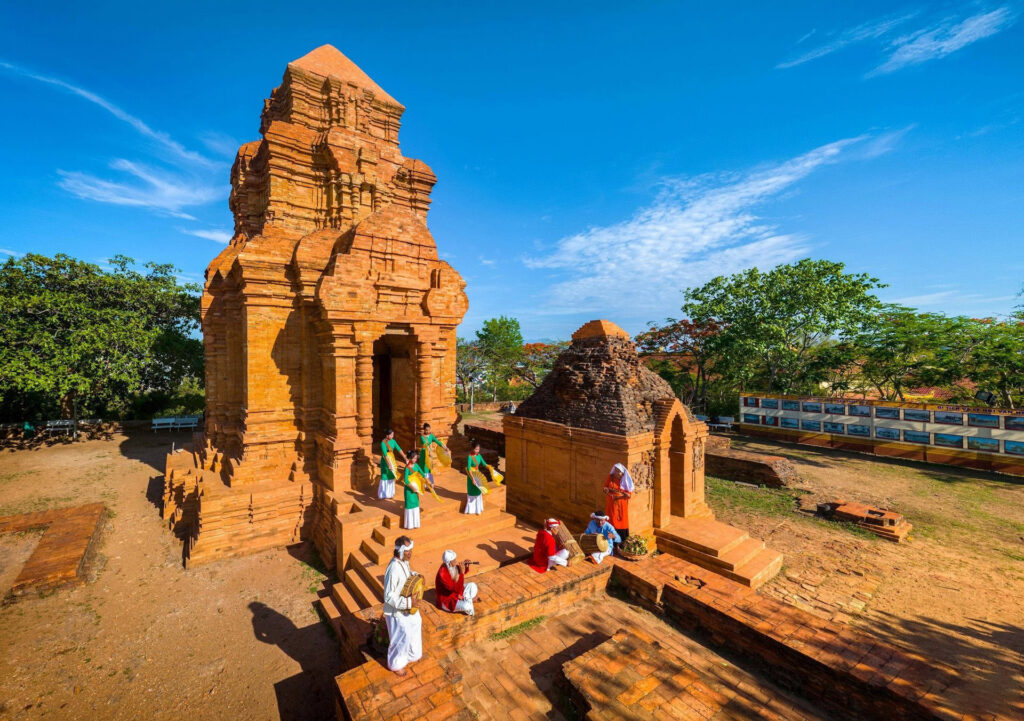
Visiting the Poshanu Towers adds genuine historical and spiritual depth to a Mui Ne itinerary that might otherwise focus exclusively on natural scenery. Many jeep tours include a knowledgeable local guide who can explain the iconography, the history of the Cham Kingdom, and the living traditions that keep this sacred site active rather than merely archaeological. It is the kind of cultural encounter that transforms a holiday into a real education.
Practical Tips for Visiting Poshanu
-
Opening hours: The towers are generally open from 7:30 AM to 5:00 PM daily.
-
Dress code: Modest clothing is respectfully required — shoulders and knees should be covered.
-
Best time to visit: Early morning, when the light is soft and the crowds are minimal.
-
Admission: A small entrance fee applies; your jeep guide will typically handle this.
5. Witness the Chaos and Color of a Fishing Village at Dawn
The Mui Ne Fishing Village is one of those places that assaults all five senses at once in the most wonderful possible way. Arrive at sunrise and you will find hundreds of traditional round basket boats — the iconic thuyền thúng — bobbing in the bay as fishermen haul in the night's catch. The harbor smells of brine and diesel and fresh fish. Vendors shout prices in rapid-fire Vietnamese. Ice is carried in massive blocks on bamboo shoulder poles.
The visual spectacle is extraordinary: the round boats painted in sky blue and fire orange, stacked against each other in the shallow water, with the morning sun turning everything luminous. This is not a staged cultural performance — it is simply life, unfolding with all its beautiful, messy vitality. Watching it from the back of a jeep as you roll slowly through the harbor road is an experience you simply cannot replicate from a tour bus window.
Beyond the main harbor, the fishing village extends into a labyrinth of narrow lanes where families dry fish on bamboo racks, repair nets under shade trees, and run small processing operations that turn the day's catch into the fermented fish sauce — nước mắm — that underpins Vietnamese cuisine. A brief walk through these lanes with a guide reveals a way of life that has changed remarkably little over generations, and that is increasingly rare anywhere in the world.
6. Kite Surf or Watch the Masters Work the Wind
Mui Ne is internationally recognized as one of Southeast Asia's premier kitesurfing destinations, and even if you have no intention of getting on a board, watching the professionals is a genuine spectacle worth building into your day. The consistent offshore winds that blow between November and April — typically averaging 15 to 25 knots — make the stretch of beach near Ham Tien a constant airshow of colorful kites arcing against the blue sky.

For beginners, numerous established schools offer IKO-certified instruction, with lesson packages running from half-day introductions to week-long full certification courses. The shallow, waist-deep water and predictable wind direction make this one of the safest places in the world to learn. Windsurfing is equally popular and equally well-catered for, with rental equipment available from multiple operators along the beach road.
Even if you simply sit at a beachside café with a cold Saigon beer and watch the kiters launch, it is genuinely thrilling. The combination of athletic grace, technical skill, and sheer physical daring on display is mesmerizing — and it adds yet another dimension to the understanding that Mui Ne is a destination with remarkable depth beyond the sunbathing crowd.
7. Explore the Binh Thuan Dragon Fruit Farms
Binh Thuan Province, of which Mui Ne is the most famous face, is the dragon fruit capital of Vietnam, producing the vast majority of the country's exports. The farms that ring the inland areas behind Mui Ne are dramatic in their own right — row upon row of wooden posts wrapped in climbing cactus-like vines, the brilliant pink and yellow fruit hanging like ornaments from the trailing arms.
Visiting a dragon fruit farm as part of a jeep tour excursion is both educational and delicious. Local farmers are typically happy to explain the growing cycle, the irrigation challenges in the sandy soil, and the fascinating technique of lighting the vines at night with electric bulbs to trick the plants into blooming out of season — a practice that creates an otherworldly glow visible from the highway after dark.
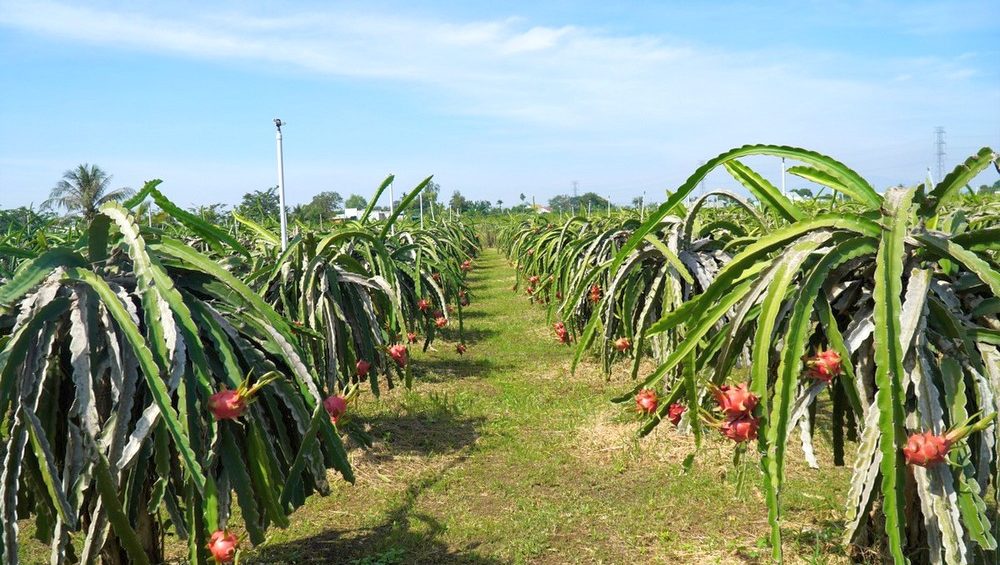
The tasting component is, predictably, the highlight for most visitors. Freshly harvested dragon fruit, eaten within hours of picking, tastes nothing like the mildly flavored imported versions found in supermarkets abroad. It is sweet, crisp, and subtly aromatic — a revelation. Your jeep guide will know which farms welcome visitors and can negotiate a tour and tasting session that adds genuine local flavor to the day.
8. Visit the Phan Thiet Market for a True Local Experience
Just 20 kilometers from Mui Ne proper, Phan Thiet city is the provincial capital and the beating commercial heart of the region — and its central market is one of the best places in southern Vietnam to experience everyday Vietnamese life at close range. The market opens before dawn and peaks in the early morning hours, when vendors arrive with produce, seafood, and dry goods from across the province.
A jeep detour into Phan Thiet market during the early morning tour is a genuine cultural immersion. You will find stalls selling every variety of tropical fruit, fresh herbs bundled in newspaper, towers of steaming bánh mì, and rows of seafood so fresh they are still moving. The fish sauce production for which the region is famous is represented here in every form — from the premium, aged varieties packaged for export to the everyday cooking sauce sold in bulk from enormous clay urns.
The market also offers excellent opportunities to try authentic local breakfast dishes, particularly bánh căn — small, crispy rice pancakes cooked in terracotta molds and typically served with fresh fish or quail eggs. It is the kind of breakfast that makes you wonder why you ever bothered with a hotel buffet.
9. Cycle or Hike the Rural Back Roads of Ham Tien
For travelers who want to engage with the landscape at a slower pace, the rural back roads behind Ham Tien village offer some of the most rewarding cycling and hiking in the region. Away from the coastal highway, narrow tracks wind through cashew orchards, dried scrubland, and small farming settlements where children wave enthusiastically at passing foreigners and dogs sleep in the middle of the road without a care in the world.
Several guesthouses and tour operators in Mui Ne rent bicycles by the hour or day, and the flat terrain makes cycling genuinely accessible even for casual riders. The reward is access to a quieter Mui Ne — one of local temples draped in bougainvillea, roadside fruit stalls where a mango costs twenty cents, and viewpoints over the bay that appear unexpectedly around corners in the track.
For hikers, the low scrub hills behind Ham Tien can be explored on foot in three to four hours, with the high points offering panoramic views over both the coastline and the interior dune landscape. A jeep can drop you at the trailhead and pick you up at a designated endpoint — combining the efficiency of motorized transport with the intimacy of foot travel in a way that makes perfect logistical sense.
10. Catch a Sunset From the Po Shanu Hill or Ba Dau Cape
Mui Ne sunsets are famous for good reason, but the best ones are not watched from the beach — they are watched from elevation. The hilltop around the Poshanu Cham Tower complex provides a sweeping 180-degree view over the coastline, the town, and the South China Sea, making it one of the finest sunset vantage points in southern Vietnam. Arriving here by jeep in the late afternoon, with the towers glowing gold behind you and the sea turning copper below, is a genuinely cinematic experience.
Ba Dau Cape (Mũi Né Cape) — the actual geographical point from which the town takes its name — is another spectacular sunset location, particularly popular with local Vietnamese families who gather here on weekend evenings for picnics and photographs. The cape juts dramatically into the sea, offering unobstructed views in three directions, and the rocky shoreline below catches and amplifies the crashing waves in a way that makes the whole scene feel operatic.
Ending a full-day jeep tour at one of these elevated sunset spots is the natural, perfect conclusion to a day that began before dawn at the White Dunes. The arc of the day — from the cool silence of sunrise over pale sand to the warm gold of sunset over the sea — feels complete in a way that few travel experiences manage to achieve. It is the full Mui Ne, experienced not just with your eyes but with all of yourself.
Making the Most of Mui Ne: Final Tips for Travelers
The most important piece of advice for anyone visiting Mui Ne is simple: do not spend all your time on the beach. The coastline is beautiful, yes, but it is the landscape, culture, and food behind and beyond the beach that will make your trip genuinely memorable. The attractions described in this guide are scattered across a significant geographic area, which is precisely why the jeep tour model has become so definitive — it collapses the distances, adds adventure to the transitions, and ensures you see the whole picture rather than just the frame.
When planning your visit, consider booking at least one full-day jeep tour and one sunrise jeep tour to cover the major natural highlights. Supplement these with independent exploration on bicycle or foot for the more intimate, spontaneous discoveries. Allow time to sit in a local café, order a strong Vietnamese iced coffee, and simply watch the life of the town unfold — because Mui Ne at street level, unhurried and unscheduled, is its own kind of reward.
Whether you have two days or two weeks, Mui Ne will give you more than you expect. The beaches are the welcome — the dunes, the streams, the towers, the fishing boats, and the fiery sunsets are the substance. Come ready to explore all of it, and you will leave with a destination that feels both thoroughly discovered and somehow still full of secrets. That is the particular magic of Mui Ne, and it is very much worth chasing.